

Food freedom sounds amazing. No rules. No guilt. Just ease.
But the truth is, most of us don’t get there overnight. Especially if we have a long history of diets, restrictions, or feeling out of control around food.
If you want food freedom that actually lasts, it helps to build a few steady habits. Not more rules. Just small practices that reduce stress, help you trust yourself, and make eating feel more manageable.
Here are 7 low-stress habits that support real food freedom.
1. Start Meals with a Check-In, Not a Rule
You don’t need a meal plan or a list of foods to avoid.
Just pause before you eat and ask yourself a couple of questions.
- Am I actually hungry?
- What kind of hunger is this – physical, emotional, mental?
- What would feel good right now?
This doesn’t need to be deep or dramatic. It can take five seconds.
The point is to build awareness. Not judgment, not control – just awareness.
That one small pause helps you reconnect with your body instead of defaulting to old patterns.
2. Set Gentle Boundaries Instead of Hard Limits
Rigid rules can backfire. But that doesn’t mean structure is bad.
Try this: instead of “no eating after 7pm,” go with “I usually stop eating around 7 unless I’m actually hungry.”
It leaves room for flexibility. It respects your real needs. But it still gives some shape to your day.
Food freedom doesn’t mean anything goes, all the time. It means you get to decide what works for you – and then let that evolve as needed.
Gentle boundaries give you direction without the backlash.
3. Keep “Good Enough” Foods on Hand
You don’t need to prep gourmet meals or buy a bunch of superfoods.
But you do need some foods that feel doable and satisfying.
Things like:
- A frozen meal that isn’t perfect, but fills you up and doesn’t make you feel like garbage.
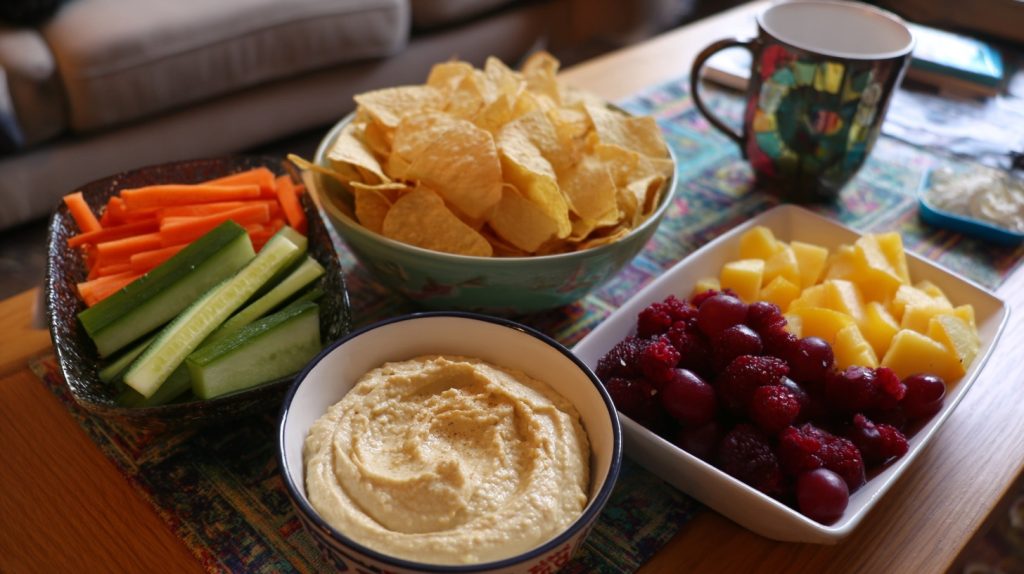
- A snack combo like fruit and cheese, or crackers and hummus.
- A sandwich that takes two minutes to make but hits the spot.
These aren’t “ideal” meals. They’re fallback options that keep you from hitting the drive-thru out of desperation.
Stock your kitchen with food that feels realistic and “good enough.” That’s how you reduce decision fatigue and build trust with yourself.
4. Don’t Label Foods as “Bad” – Focus on How They Make You Feel
If every food is either good or bad, you’re going to feel like you’re failing every time you eat something you actually enjoy.
Let’s move away from that.
Instead, pay attention to how foods feel in your body. Not how they’re labeled in your head.
You might start to notice things like:
- This makes me feel sluggish after lunch.
- That actually keeps me full for a while.
- That gives me a quick hit, but then I crash.
This is useful data. It helps you make decisions based on your experience, not someone else’s rules.
When you stop moralizing food, it becomes a lot easier to eat with intention.
5. Create a Default Routine That Still Allows Flexibility
You don’t need a strict meal plan. But a loose rhythm can help.
Maybe that means:
- Eating roughly every 3-4 hours
- Having a go-to breakfast you don’t have to think about
- Keeping 2 or 3 lunch options on rotation
The goal isn’t to box yourself in. It’s to reduce decision fatigue and make eating less chaotic.
Structure doesn’t have to mean control. It can be a form of support.
And when your routine is flexible, you can adapt it without guilt.
6. Learn to Pause Instead of React
This one habit can change your entire relationship with food.
Let’s say you get the sudden urge to grab something sweet.
Instead of saying no, or giving in automatically, try pausing.
Give yourself 30 seconds to breathe and ask:
- What am I feeling?
- Do I really want this right now?
- Is there something else I need?
You might still eat the thing. But now it’s a choice, not a reflex.
That pause creates space. It puts you back in the driver’s seat.
7. Celebrate Consistency, Not Perfection
You don’t need to eat perfectly to have food freedom.
What matters more is how often you come back to the habits that support you.
If you check in before meals 3 days in a row, that’s a win.
If you pause before grabbing a snack and decide to go ahead anyway – that’s still a win.
If you eat a frozen pizza and move on without spiraling – another win.
Food freedom grows when you stop making every choice mean something about your worth.
Start noticing what’s working, not just what isn’t.
Final Thought
Food freedom doesn’t happen by chance. It happens by building habits that support the kind of relationship you actually want with food.
Not rigid. Not chaotic. Just grounded and clear.
These 7 habits aren’t about control. They’re about trust.
Pick one to start with. Keep it small. Let it build.
That’s how food freedom becomes real – and lasts.