A lot of people try to sort out their eating by doing what feels sensible in the moment. They make a plan on a Sunday, buy loads of healthy food, tell themselves this time they are properly doing it, and then by Wednesday they are back to grabbing whatever is easiest because work ran late and they are tired and a bit fed up.
That is not a character flaw. It is just what happens when the plan asks too much, too fast.
If you want to eat better in a way that actually sticks, tiny changes usually beat dramatic ones. Not because tiny changes are magical, but because you will actually do them. That matters more than having a perfect plan in your notes app.
Why big changes usually fall apart
Most people do not fail because they do not know what healthy food is. They fail because their daily life is busy, messy, repetitive, and full of moments where convenience wins.
You can be very sincere about wanting to eat well and still not have the energy to cook a balanced meal every night. You can buy salad ingredients and still end up eating toast at 9 pm because the day got away from you.
Big food overhauls tend to come with too many moving parts at once:
- more cooking
- more shopping
- more planning
- more resisting cravings
- more thinking about food all day
That last one is a killer, by the way. If your healthy eating plan turns food into a full-time admin job, it probably will not last.
What a micro-habit actually looks like
A micro-habit is just a tiny action you can repeat without needing a big burst of motivation.
Not a full transformation. Not a 12-step morning routine. Just something small enough that you can do it even on a fairly average day.
A few examples:
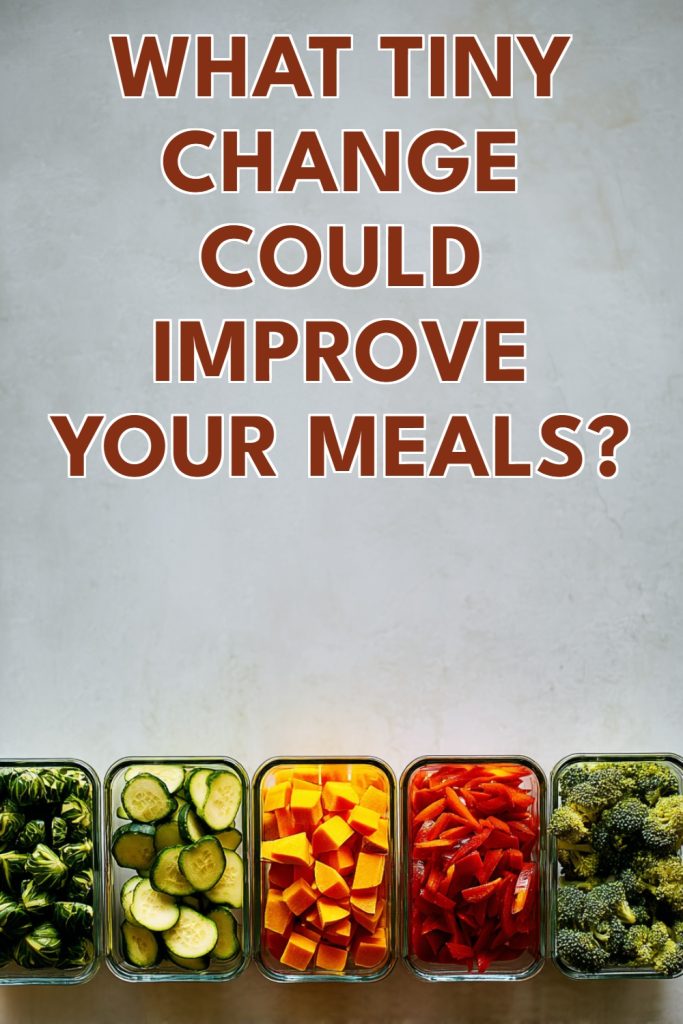
- Put a piece of fruit on your desk before you start work
- Add one vegetable to your dinner, even if the rest of the meal is not ideal
- Drink a glass of water before lunch
- Eat something with protein at breakfast
- Pause for ten seconds before grabbing a snack and ask yourself if you are actually hungry
- Put the biscuits in a cupboard instead of leaving them out on the counter
That sort of thing.
None of these look impressive. That is partly the point. If a habit sounds almost too small to matter, it is often about the right size.
Small changes do more than people think
People often dismiss tiny habits because they want a bigger result than the habit seems to deserve.
Fair enough. Adding spinach to one meal does not feel like much. Drinking water before lunch is not exactly a life event. But eating is not one decision. It is dozens of little decisions, repeated every week, for years. So changing a few of those decisions changes more than it looks like.
Also, small habits have a way of dragging other things along with them.
Start eating a decent breakfast and you might notice you are less desperate for sugary stuff at 11 am. Start keeping chopped veg in the fridge and dinner gets slightly easier. Start pausing before snacks and you begin to notice patterns, like always wanting crisps when you are putting off work or getting irritated with someone.
That is useful information. You do not get that sort of awareness when you are just trying to white-knuckle your way through a strict plan.
Add before you restrict
This is one of the more helpful shifts, especially if you are tired of food rules.
Instead of starting with what you need to stop eating, start with what you can add.
Add protein to breakfast.
Add fruit to the afternoon.
Add an extra thing to dinner that came from the ground or at least resembles it.
People sometimes worry this sounds too soft, like you are avoiding the real issue. But in practice, adding nourishing food often changes the rest without you forcing it. If lunch actually fills you up, you are less likely to spend the afternoon prowling around the kitchen. If your meals are more satisfying, it is easier to stop treating every craving like an emergency.
And mentally, it is a lot easier to work with. Restriction makes people weird around food. Maybe not on day one, but usually before long.
How to make a micro-habit stick
It helps if the habit is attached to something that already happens.
A simple formula is:
After I [current routine], I will [tiny food action].
For example:
- After I make my morning coffee, I will put berries or a banana next to my breakfast
- After I plate my dinner, I will add one handful of salad or veg
- After I get home from work, I will fill a glass of water before doing anything else
This works better than vague plans like “eat healthier this week” because your brain does not have to negotiate with itself every time. The cue is already there.
It also helps to remove friction. If the healthy option requires washing, chopping, cooking, and a decent mood, it is at a disadvantage.
So make the tiny habit easy on purpose. Buy pre-cut veg if that helps. Keep fruit visible. Put yoghurt at eye level in the fridge. Make the better choice obvious enough that you do it without a whole internal discussion.
A few mistakes people make
The main one is choosing something that is not actually tiny.
“I will cook a healthy dinner every night” is not a micro-habit. It is a project.
“I will add frozen peas to whatever I am already making” is more like it.
Another mistake is starting six habits at once because you are feeling motivated. Motivation is unreliable. It is nice when it shows up, but it is not much use as a foundation.
And then there is the impatience problem. People start a small habit, do it for five days, and think, well, this is hardly changing my life.
No, probably not in five days. But that is not a reason to bin it.
A lot of the early payoff is not dramatic. It is things like feeling slightly more in control, thinking about food with less chaos, having one less moment each day where you default to whatever is easiest. That may sound minor, but it is usually how this starts.
If you want to try this, keep it boring
Honestly, boring is good here.
Pick one habit. Make it so easy you would feel a bit silly not doing it. Repeat it for a week without trying to optimise the whole thing.
That might be:
- one piece of fruit with lunch
- one glass of water before dinner
- one proper breakfast three times this week
- one extra vegetable with your evening meal
Do that first. See what gets easier. Then build from there.
Most lasting food change looks pretty unremarkable while it is happening. It is not dramatic. It does not make a great before-and-after post. It is just a series of small choices becoming more normal.
Which, in the end, is usually what people wanted all along.