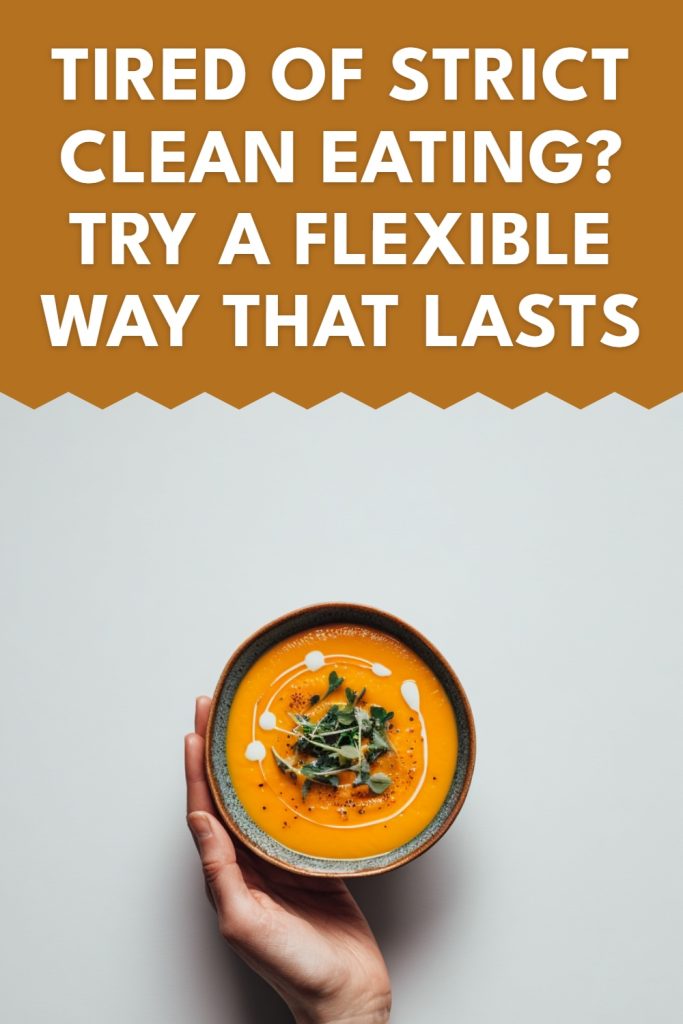
A lot of people say they want to “eat clean”, but if you ask ten people what that means, you get ten different answers. For some it means no sugar, no bread, no sauces, no snacks, no fun. For others it just means cooking a bit more and not living off beige food from a packet. Big difference there.
I get why the phrase sticks. It sounds simple. Clean sounds good. Clean sounds sorted. You imagine yourself eating proper meals, feeling lighter, less bloated, less foggy, more in control. Fair enough.
The problem starts when “clean eating” turns into a weird moral system where a chicken salad is you being virtuous and a slice of pizza means you’ve gone off the rails. Once food gets split into clean and dirty, good and bad, people usually end up swinging between being very strict and then having one tired, hungry, stressed evening where they think, well, I’ve already messed it up now.
That whole setup is shaky from the start.
Where clean eating usually goes wrong
A lot of clean eating advice is basically dieting in different clothes. It sounds more wholesome, but the mechanics are the same. Cut loads of things out. Follow a perfect plan. Ignore hunger if it doesn’t fit the rules. Feel pleased with yourself for three days. Then get annoyed, bored, or really hungry.
I’ve seen people decide they’re eating clean now, which apparently means plain yoghurt, dry chicken, no chocolate, no crisps, dressing on the side, and some grim homemade snack balls that taste like blended carpet. They last about a week and then they’re in the supermarket on a Friday night buying everything they banned.
It’s not because they have no discipline. It’s because the plan was miserable.
Also, life is not set up for rigid eating. Someone brings cake into work. You go out for dinner. You’re knackered and need something quick. Your kid leaves half a croissant on the counter and somehow that becomes your breakfast. Real life is messy and repetitive and not always ideal. If your version of healthy eating only works when you’re fully organised and well-rested, it’s not very useful.
A more flexible version makes more sense
I think a better way to look at “eating clean” is just eating in a way that generally helps you feel decent. More food that fills you up and gives you something useful. Fewer meals that leave you starving again an hour later. A bit less mindless grabbing. A bit more intention. That’s enough.
You do not need to eat like you’re preparing for a fitness photo shoot.
You also do not need to pretend some foods have become illegal. Most people do better when they stop trying to create a perfect diet and start building a decent default. Not flawless. Just decent.
That might mean meals with protein, fibre, and something fresh in them most of the time. It might mean having foods in the house you can throw together when you’re tired, instead of waiting until you’re starving and eating whatever’s easiest. It might mean still having takeaway sometimes, but not in the old automatic way where it happens because you didn’t think ahead at all.
A flexible approach is less dramatic, which is probably why people overlook it. But it actually survives contact with normal life.
Start by adding things in
This is the bit people often miss. If you focus only on cutting things out, your diet gets smaller, duller, and more irritating. If you start by adding useful stuff in, things shift without so much friction.
A few examples:
- Add protein to breakfast so you’re not sniffing around the kitchen at 10:30.
- Add fruit to the afternoon instead of relying on caffeine and hope.
- Add veg to meals you already eat instead of trying to become a different person who suddenly loves kale bowls.
- Add a proper lunch so dinner doesn’t turn into a full-scale event.
- Add easy food at home like eggs, Greek yoghurt, wraps, tinned beans, microwave rice, frozen veg, decent bread, whatever you’ll actually use.
That sounds almost too basic, but basic is usually what’s missing. A lot of overeating is not about emotional chaos or lack of willpower. Sometimes it’s just that you had toast for breakfast, a cereal bar for lunch, and by 5 pm you would happily chew the arm off the sofa.
Stop aiming for purity
This is where clean eating gets especially stupid. People start reading labels like they’re customs officers. One ingredient they don’t recognise and suddenly the food is suspicious. Or they think if a meal isn’t perfectly whole, fresh, organic, homemade and balanced, it barely counts.
Meanwhile, a sandwich, a supermarket soup, and some fruit would have done the job just fine.
You don’t get extra points for dietary purity. You’re trying to feed yourself reasonably well, not pass an exam.
Some processed food is handy. Some convenience food makes life easier. A frozen meal plus a bag of salad is often a better option than getting overly ambitious, failing, and then ordering enough takeaway for three people. This is not a glamorous insight, but it is useful.
Small habits matter more than big intentions
Most people already know the broad outline of healthy eating. More whole foods, more protein, more fibre, fewer ultra-processed snacks, less random eating. None of this is breaking news.
The issue is not information. It’s the gap between what sounds sensible on a Sunday and what you actually do on a Wednesday when you’re busy and a bit fed up.
That’s why tiny habits matter.
Not because tiny habits are exciting. They’re not. They’re a bit boring, honestly. But boring things repeated often are usually what change your diet.
Maybe your habit is making breakfast before coffee. Maybe it’s chopping vegetables while dinner cooks so tomorrow’s lunch is less pathetic. Maybe it’s sitting down to eat instead of wandering around the kitchen picking at things. Maybe it’s drinking a glass of water before you decide you’re desperate for a snack.
These are not life-changing in the cinematic sense. But stack enough of them together and your eating starts looking very different.
What this looks like in actual life
Flexible clean eating is not perfection with a more relaxed font. It means your overall pattern is solid, even when individual meals are a bit scrappy.
You might eat porridge with fruit and peanut butter for breakfast, a quick wrap with chicken and salad for lunch, pasta for dinner with some veg and parmesan, then have chocolate later because you felt like it. That’s a normal day. Nothing to confess.
You might go out for burgers on Saturday, have a couple of drinks, and not turn it into a three-day spiral where you keep eating rubbish because the weekend is “ruined”. You just go back to normal.
You might buy a supermarket pizza, throw a side salad next to it, and call that good enough.
Honestly, good enough saves people a lot.
A few signs you’re on the right track
You’re not constantly negotiating with yourself about food.
You have fewer moments where you feel weirdly out of control around things you normally ban.
Your meals are more filling, so the late-night scavenging drops a bit.
You stop having those Monday-morning resets where you declare war on your own appetite.
And maybe most importantly, healthy eating starts taking up less space in your head. You’re just eating. Some meals are better than others. No drama required.
If “eating clean” helps you remember to eat more nourishing food, fine. Keep the phrase if you like it. But I’d drop the rigid version of it. It’s too easy for it to become another way of making food harder than it needs to be.
Eat in a way you can keep doing when you’re busy, tired, social, stressed, on holiday, or just not in the mood to be impressive. That’s usually the version that lasts.