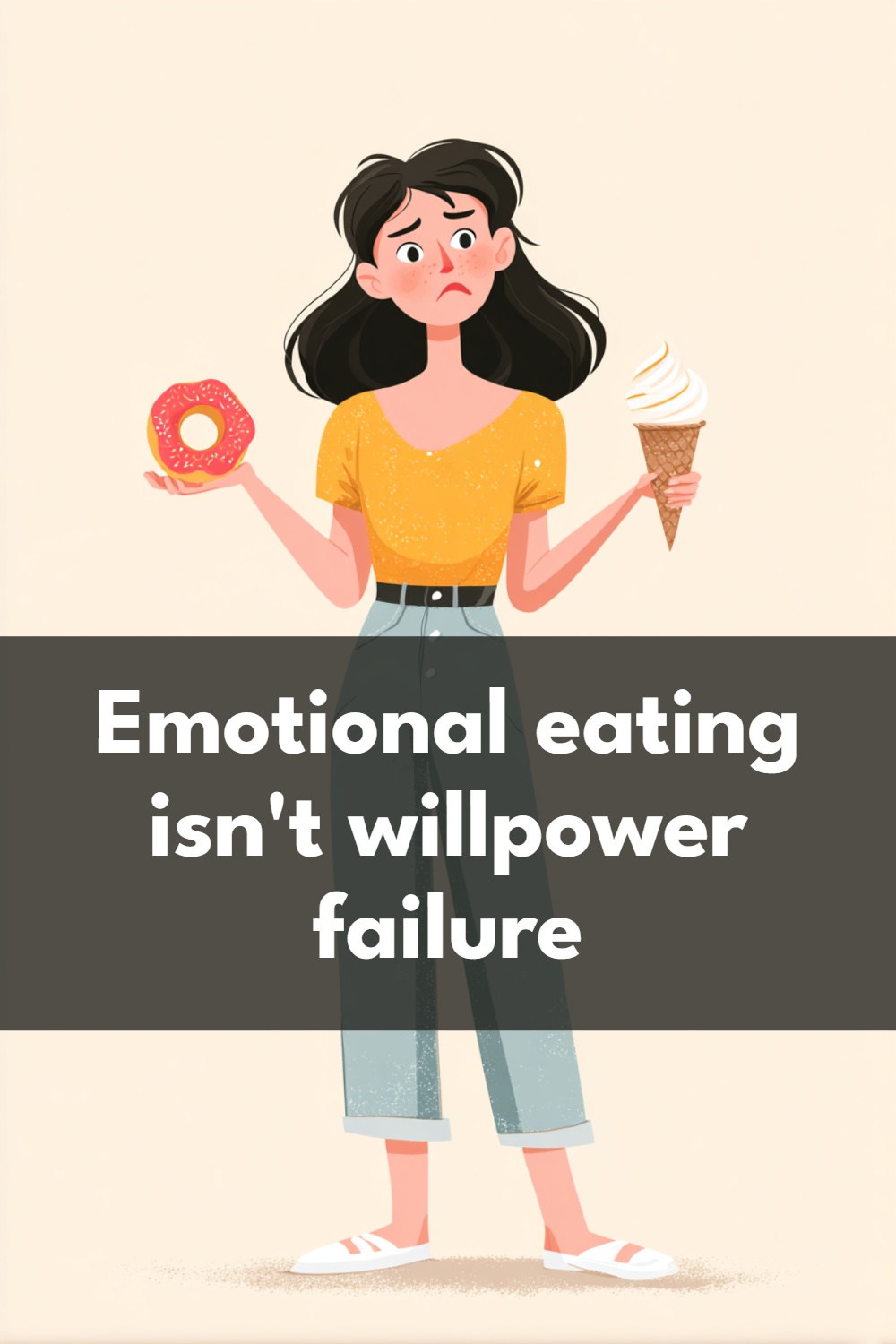
A lot of people talk about emotional eating as if it is basically a personality defect. Like some people are just disciplined and other people are the sort who end up in the kitchen at 9:47 pm eating cereal straight from the box because work was awful and they cannot be bothered to make another decision.
I do not buy that.
Emotional eating usually is not about being weak. It is about trying to feel better, calm down, switch off, fill a gap, avoid something, or get through a rough patch in the quickest way available. Food happens to be very good at that. It is easy, familiar, socially acceptable, and it works fast, at least for a little while.
That is why the whole “just use more willpower” thing tends to fall apart in real life. Willpower is a bad plan when you are tired, stressed, lonely, bored, annoyed, or running on fumes. Which, for a lot of people, is basically Tuesday.
What emotional eating usually is
Sometimes people hear the phrase and picture dramatic situations. Big breakdowns. Intense binges. It can look like that, sure. But often it is much more ordinary.
It is the biscuits after a difficult call.
It is ordering takeaway because the day felt grim and cooking feels insulting.
It is wandering into the kitchen while procrastinating.
It is wanting something sweet the second the house finally goes quiet.
It is not always some deep mystery. Quite a lot of the time, food is just being used for a job.
A few common jobs food ends up doing:
- Comfort when you feel flat or upset
- Reward after a hard day
- Relief when you are overwhelmed
- Distraction when you do not want to sit with a feeling
- Something to look forward to when the day has been dull
- A way to mark the end of work, parenting, commuting, or general human effort
That does not make you broken. It means your brain has learned that food helps in certain moments. And if that pattern gets repeated enough, it becomes automatic.
Why willpower is such a flimsy explanation
People love blaming themselves because it sounds clean. “I know what to do, I am just not doing it.” But eating is not happening in some vacuum where you calmly assess your values and then make an elegant choice.
A lot of eating happens when your brain is tired and looking for relief. If you are stressed, your body pushes you toward quick comfort. If you are underslept, everything gets harder. If your meals have been patchy all day, then by evening you are not making decisions, you are basically recovering.
Then there is habit.
If you have spent years eating in response to certain cues, your brain starts getting ahead of you. Sofa equals snacks. Bad meeting equals chocolate. Kids in bed equals wine and something salty. You do not have to consciously decide much. The urge just shows up.
That is why people can feel like they are watching themselves do it. They are not stupid. They are running a learned pattern.
Shame makes it worse
This part gets missed all the time.
A lot of emotional eating is kept going by the reaction afterwards. Not just the food itself.
You eat because you feel bad.
Then you feel guilty for eating.
Then you feel worse.
Then food looks useful again.
That loop can run for years.
And shame is sneaky because it pretends to be helpful. It tells you that if you are hard enough on yourself, maybe you will finally change. Usually the opposite happens. People who feel ashamed tend to go more secretive, more all-or-nothing, more “sod it, I have already ruined today”.
I am not saying you have to love every eating habit you have. Just that self-contempt is not a serious strategy.
How to tell if it is emotional eating
It is not always obvious in the moment, especially if you are used to doing it.
A few signs:
- The urge comes on fast and feels urgent
- You want something specific, usually very rewarding, not just food in general
- You are eating to change how you feel, not because your body is asking for fuel
- You keep going past the point where hunger would explain it
- You feel a bit checked out while it is happening
Physical hunger is not always neat and saintly either, so this is not about becoming some hunger detective. It is more about noticing patterns. If every evening ends with “I need a treat” after a day you barely stopped to eat, that tells you something. If you always want crunchy, salty stuff after conflict, that tells you something too.
A more useful response
Most people try to fix emotional eating by going straight to control. They tighten rules, ban foods, promise themselves they will be good, then wonder why they end up back in the same spot three days later eating toast over the sink.
A better place to start is simpler than that.
Pause long enough to notice what is going on.
Not a dramatic mindfulness ritual. Just a small interruption.
Something like:
- What happened just before this?
- What am I actually feeling?
- Am I hungry, stressed, avoiding something, knackered, annoyed?
- What do I need right now?
Sometimes the answer is still food. Fine. But even that tiny bit of awareness changes the pattern over time. You are no longer fully on autopilot.
And if you can, make the alternative very small. People often come up with absurdly worthy solutions when they are upset. They tell themselves to journal for twenty minutes or do breathwork or prepare a balanced snack plate. Meanwhile they are standing in the kitchen wanting crisps.
Try realistic instead.
- Eat a proper meal if you have not really eaten
- Make tea and sit down for five minutes before deciding
- Leave the kitchen and have a shower
- Text someone
- Go outside for one lap of the block
- Have the food, but put it on a plate and actually notice you are eating it
- Ask yourself if what you need is comfort, stimulation, rest, or just a break from everyone
That last one is useful. A lot of people are not hungry. They are overloaded.
You do not need to stop emotional eating completely
I think this trips people up as well. They decide the goal is never to eat for comfort again, which is a bit unrealistic. Humans do this. Food is emotional. Birthday cake is emotional. Soup when you are ill is emotional. Takeaway after a rubbish week is emotional.
The problem is not that food ever has emotional value. The problem is when it becomes your default response to every uncomfortable thing, and it stops feeling like a choice.
If you want to change it, start by getting more curious and less dramatic. Notice the moments. Notice the setups. Notice which days are worst for it. Eat more consistently. Sleep more if you can. Make your environment a bit easier. Stop treating every slip like a moral event.
That is not as exciting as a total reset or a strict plan, but it is usually how people actually get somewhere.