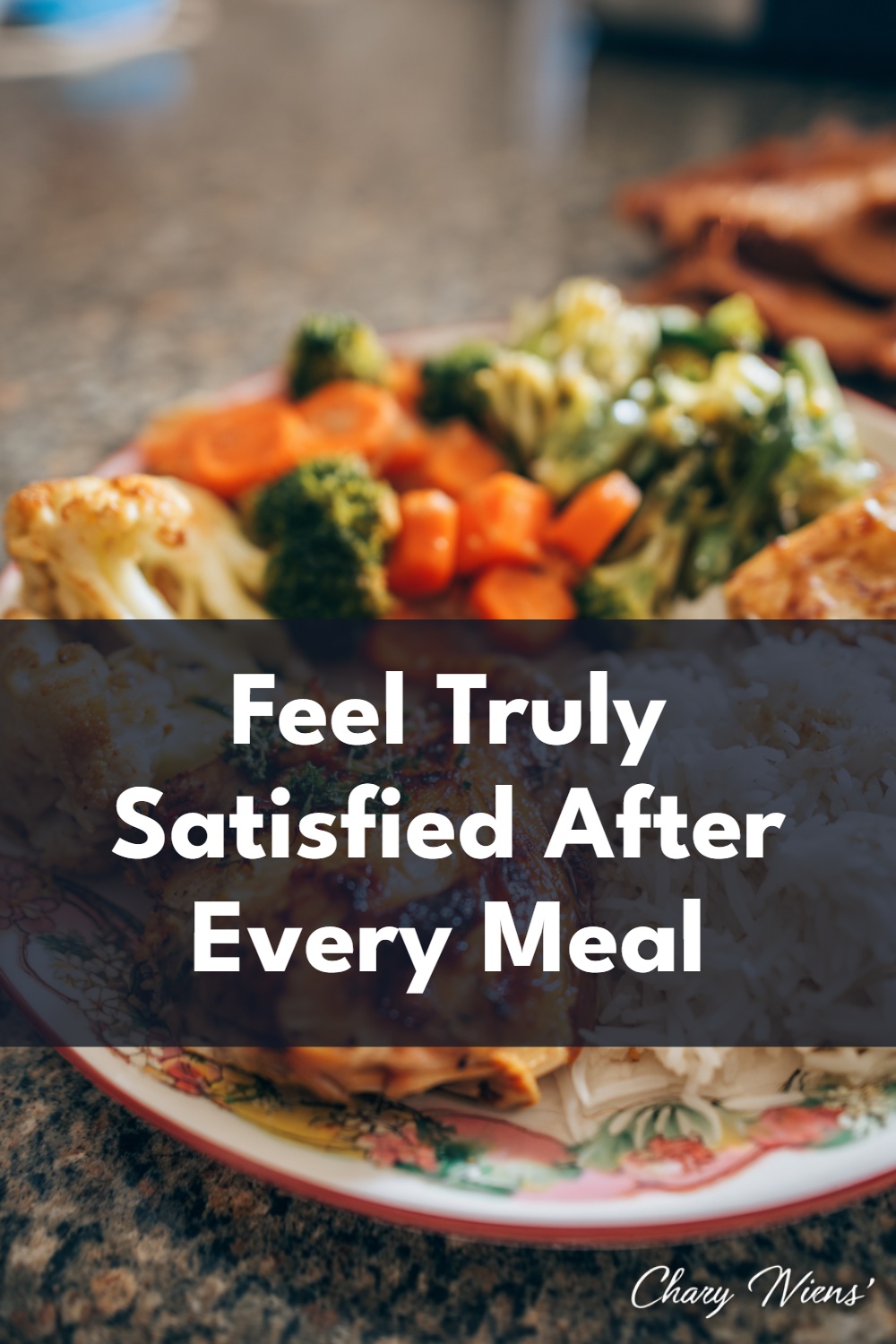
You finish dinner, stand up, and within about four minutes you’re back in the kitchen looking for something else.
Not always because you’re starving. Sometimes you’re already full enough. But you still want a bit more. Something sweet. Something crunchy. Something that feels like the meal isn’t quite over yet.
A lot of people assume this means they have no willpower, or they’re doing something wrong, or they just need to be stricter. I don’t think that’s usually it.
Quite often the meal just didn’t do the job.
By that I mean it didn’t leave you properly satisfied. Maybe it filled your stomach but didn’t feel like much. Maybe you ate it half-distracted and barely registered it. Maybe lunch was tiny, then dinner turned into a sort of catch-up operation and your brain was still revving after you’d finished.
Autopilot eating is usually less dramatic than people make it sound. It’s not some deep personal failing. It’s more like a bunch of ordinary things stacked together – habit, stress, speed, distraction, meals that are a bit skimpy or weirdly joyless.
If you want to stop doing that constant post-meal wandering around food, it helps to stop treating it like a discipline problem and start looking at satisfaction.
Full is not always satisfied
This is one of the biggest misses in healthy eating advice.
You can be physically full and still not feel done.
Anyone who’s eaten a sad desk lunch knows this. You have technically eaten. Your stomach isn’t empty. But an hour later you’re thinking about toast, chocolate, crisps, anything. Partly because the meal may not have had much staying power, and partly because it didn’t feel like a proper meal in the first place.
Satisfaction has a few parts to it.
There’s the physical side – did you eat enough food, and did it actually contain things that keep you going?
Then there’s the mental side – did you enjoy it, or was it another round of food you’re trying to force yourself to like because it’s supposed to be healthy?
And there’s the attention side – did you notice that you were eating, or did the meal disappear while you were replying to messages and half watching something?
When one of those bits is missing, people often end up chasing the missing piece afterwards.
Why people eat on autopilot
Usually it’s not hunger in the clean, obvious sense.
It’s more like this:
- You’ve trained yourself to have something sweet after dinner every night, so your brain starts asking for it before you’ve even put the plate in the sink.
- You ate lunch in a rush and it wasn’t enough, so by evening you’re playing catch-up.
- You’ve been “being good” all day on yoghurt, fruit, and salads that would barely satisfy a medium-sized dog, then you’re shocked that dinner turns messy.
- You’re stressed, tired, overstimulated, or bored, and food is there.
- You eat meals so fast your body barely has time to register what’s going on.
- You pick while cooking, then eat standing up, then have something else while clearing up, and at no point does your brain get a clear signal that the meal happened and ended.
That last one matters more than people think. A meal with no edges tends to spill into random extra eating. Not because you’re greedy. Just because the whole thing stayed fuzzy.
Meals that actually keep you going
I don’t think everyone needs a perfect formula, but most satisfying meals do contain a few basics.
1. Something with real protein
If meals are mostly carbs with a bit of garnish, a lot of people are hungry again fast. Protein helps. Eggs, Greek yoghurt, chicken, fish, tofu, beans, lentils, cottage cheese, whatever you actually eat. Doesn’t need to be bodybuilder food. Just enough that the meal has some backbone.
2. Fibre, usually from plants or slower carbs
Vegetables, beans, fruit, oats, potatoes, wholegrains. Again, this isn’t about moral virtue. It just helps food stick around a bit longer. A meal of white toast and jam is very easy to eat and very easy to out-hunger.
3. Some fat
People still try to do these very stripped-down meals and then wonder why they’re scavenging an hour later. Fat helps with satiety and also makes food taste decent. Olive oil, nuts, seeds, avocado, cheese, full-fat yoghurt, peanut butter. Normal food.
4. Enough volume
Sometimes the issue is simple: the meal was too small. Not everything has to be huge, but if your plate looks like a snack and you’re pretending it’s lunch, your body may have a few comments later.
5. A bit of actual enjoyment
This one gets ignored because it sounds soft. It isn’t. If your meals are nutritious but relentlessly dull, that catches up with you. A satisfying meal usually tastes good, has some texture, maybe something warm, maybe something fresh. Food should feel like food, not an edible task list.
A few signs your meal isn’t really satisfying you
You finish eating and immediately start mentally scanning for dessert.
You’re in and out of cupboards within ten minutes.
You eat very quickly, then feel weirdly unconvinced by the whole meal.
You notice you’re always looking for “just a little something” after lunch or dinner.
Or you keep making virtuous meals that look healthy on paper but somehow end with biscuits in your hand at 9 pm.
That doesn’t automatically mean biscuits are the problem. Sometimes the earlier meal was.
Things that help, without turning eating into homework
You do not need a long ritual and a feelings journal every time you have a sandwich. But a few small tweaks can make a real difference.
Slow down a little at the start
I know, everyone says eat slowly. Annoying advice, usually because it’s said in a floaty way that has nothing to do with normal life.
I’m not talking about chewing each bite 27 times.
Just try not to inhale the first half of the meal while standing at the counter. Sit down if you can. Take the first few bites like a person who knows food will still be there in thirty seconds. That alone can change how satisfying a meal feels.
Eat meals that look finished
Plating food matters more than people think. If you’re grazing from packets, picking from the pan, slicing bits off things while making lunch, your brain doesn’t get a clean read on what you’ve had.
A plate or bowl sounds almost insultingly basic, but it creates a clear meal. Start, middle, end. That helps.
Check in halfway through
Not with a dramatic inner monologue. Just a quick pause.
How’s this going? Am I still hungry? Do I actually want more, or am I shovelling because it’s there?
Sometimes you realise you need more than you served yourself. Fine, have more. Other times you notice you’re already past satisfied and just operating on momentum.
Build in one thing you properly enjoy
This can be flavour, crunch, sauce, melted cheese, good bread, whatever makes the meal feel less like punishment.
People get themselves into trouble trying to make every meal ultra-clean and weirdly joyless. Then later they crack and go hard on snack food because at some point the brain wants a vote.
Watch the under-eating earlier in the day
If evenings are messy, look at breakfast and lunch before blaming your nighttime self.
A lot of “bad habits” are just delayed responses to not eating enough at 10 am and 1 pm. People often miss this because the effect shows up later, when they’re tired and less patient.
Give the meal a proper ending
This sounds small because it is small, but it works.
If you tend to drift into extra eating after meals, create some kind of finish line.
Clear the plate. Wipe the table. Make tea. Brush your teeth. Go outside for five minutes. Put the kitchen in a closed state.
Not because you’re banning yourself from eating again. You’re just marking the meal as complete.
A lot of autopilot eating happens in the vague space after eating but before the next thing. You’re still hanging around food, half undecided, not hungry exactly, not quite done. A simple closing action cuts through that.
Pick one habit, not six
This is where people usually overdo it.
They decide from now on every meal will have protein, fibre, healthy fats, mindful chewing, no screens, proper plating, hunger scales, gratitude, and a herbal tea finale.
Then by Thursday they’re back to eating crackers over the sink.
Better to pick one useful change and make it normal.
Maybe it’s adding protein to lunch so you’re not hollow by 4 pm.
Maybe it’s sitting down for dinner instead of wandering about while eating.
Maybe it’s waiting five minutes after a meal before deciding whether you want more.
Maybe it’s making your meals less bleak.
None of this is flashy, which is probably why it works. Feeling satisfied after meals is usually not about some brilliant trick. It’s more often a matter of eating enough, eating properly, noticing what you’re doing, and stopping the little automatic patterns before they take over the whole evening.
If you keep ending up in the kitchen after meals, I wouldn’t start with stricter rules. I’d start with a more honest question: did that meal actually satisfy me?
A lot of the time, the answer is no. And that’s useful information.